
The Illusion of Stereo and the Phantom Center
Stereo has long been celebrated as one of the greatest achievements in audio reproduction. With just two speakers, carefully positioned, listeners can experience the uncanny illusion of a singer or guitarist standing right in the middle. This “phantom center” is often praised as proof of stereo’s brilliance. And to be fair, it is impressive — a trick of acoustics and perception that has defined audiophile culture for decades.
The Limits of the Sweet Spot
But illusions have limits. The phantom center works beautifully if you’re seated in the sweet spot, equidistant from both speakers. Move even slightly off-axis, and the illusion begins to weaken. The lead singer drifts, the guitar loses focus, and the stage feels unstable. For all its magic, stereo is still asking two speakers to do the job of three.
The Overlooked Reality
This is where the oversight lies. Audiophiles have built an entire philosophy around celebrating the phantom center, while ignoring the fact that in reality, the lead performer’s presence is not an illusion at all — it’s carried by a microphone, a dedicated source that deserves a dedicated speaker.
The Stage Analogy and the Missing Anchor
Think about how performers stand on stage. The lead singer or guitarist is front and center, commanding attention, while supporting musicians flank them to the left and right. Stereo setups attempt to replicate this arrangement, but they rely on trickery. Two speakers are asked to conjure the presence of the lead performer without actually reproducing it directly.
The Microphone Connection
In reality, the microphone isolates the voice or instrument and projects it to the audience. That microphone is a dedicated source, and in our listening rooms, we should honor that reality. A center speaker is the natural counterpart to the microphone — the anchor that carries the lead performer into our homes. Without it, we’re left with a ghostly illusion that collapses the moment we step outside the sweet spot.
Challenging Audiophile Thinking
This is the blind spot in audiophile culture. They celebrate the phantom center as though it were the pinnacle of fidelity, when in fact it is a compromise. The true fidelity lies in acknowledging the performer’s microphone and giving it a speaker of its own.
Why Audiophiles Resist and Why Studios Don’t
Many audiophiles dismiss the center speaker as a “home theater gimmick.” They cling to the purity of two-channel playback, convinced that adding a third speaker contaminates the experience. But this resistance is cultural, not technical. It’s a tradition born from stereo’s dominance, not from acoustic necessity.
Audiophile Tradition
Stereo has been the gold standard since the 1950s, and purists often equate “fewer channels” with “greater purity.” This mindset overlooks the practical reality of how performances are captured and reproduced.
Studio Practice
Professional studios don’t share this bias. In mixing and mastering environments, the center channel is indispensable. Dialogue, lead vocals, and solo instruments are routed to the center to ensure stability. Engineers know that without it, the soundstage collapses for anyone not sitting dead center. The center channel is not a gimmick in the studio — it is the standard.
This contrast is telling. Audiophiles cling to illusions, while studios embrace anchors. If authenticity is the goal, then audiophiles should take a cue from the professionals and recognize the center speaker as essential.
Design, Emotion, and the Call to Reconsider
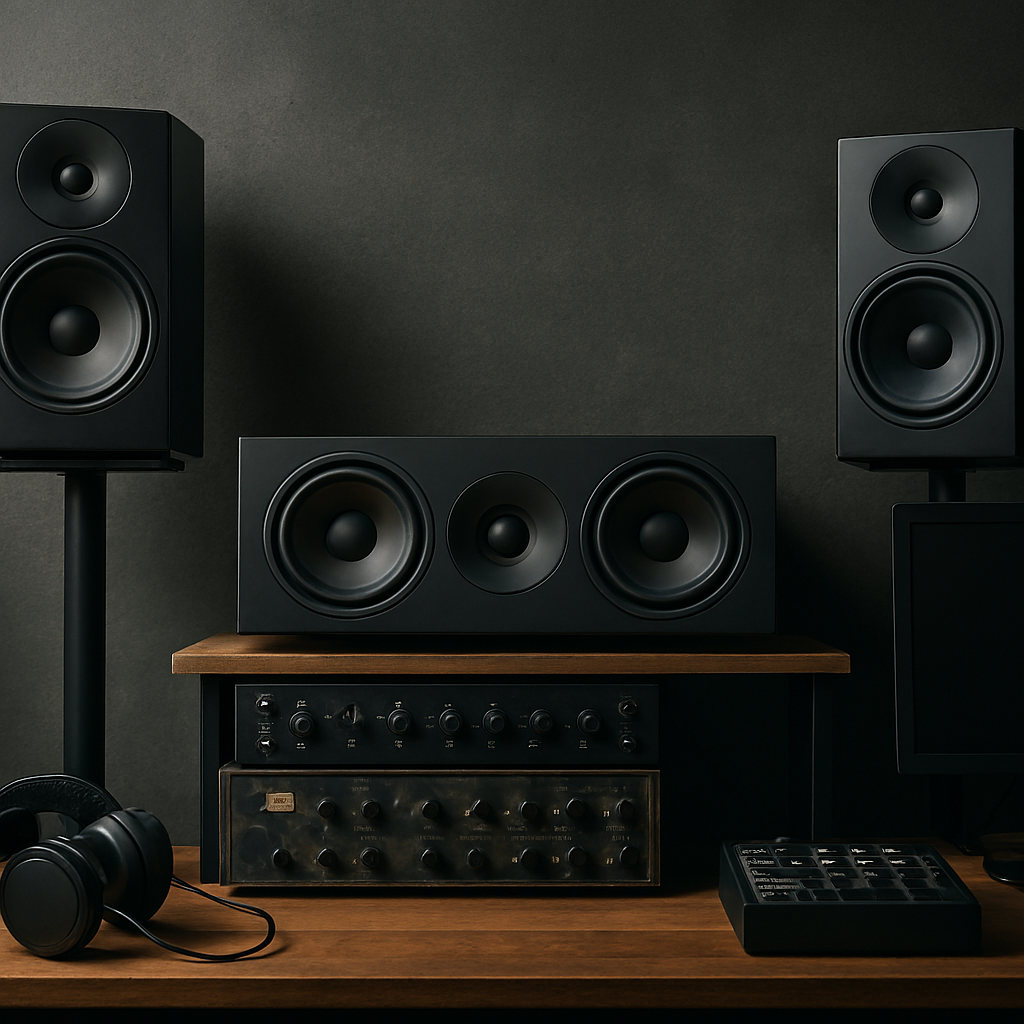
Of course, not all center speakers are created equal. Horizontal designs often compromise dispersion, and timbre matching with left and right speakers is critical. Placement below a screen or angled upward introduces challenges. But when designed properly, the center speaker disappears into the soundstage, leaving only the performance.
Design Challenges
The best center speakers avoid the pitfalls of horizontal MTM layouts, opting instead for coaxial or vertically aligned drivers. Matching the tonal character of the left and right speakers ensures seamless pans across the stage.
Emotional Impact
The emotional impact of a strong center cannot be overstated. It grounds the entire experience, stabilizes the stage, and makes the performance believable. Suddenly, the lead singer isn’t a phantom conjured by two speakers — they’re a presence, standing right there in your room.
A Call to Action
It’s time to challenge the assumption that two speakers are enough. Studios already know the truth. Performers already stand center stage. Microphones already isolate their voices. The center speaker is not a compromise — it’s the missing piece. Audiophiles celebrate the phantom center, but it’s the real center speaker that makes the magic complete.
To help you explore this further, I’ve curated a selection of center speakers that honor the role of the lead performer — each designed to anchor your soundstage with clarity, stability, and emotional presence.
Yes, most center speakers have two, three, or more drivers. That’s not a compromise — it’s a design necessity. The lead performer’s voice demands clarity, and no single driver can carry that burden alone. The center speaker exists to honor the microphone, and its multi-driver design ensures that presence is stable, believable, and real.