

Acknowledging the Present
Current bone conduction headphones already serve situational awareness needs well. They let joggers hear traffic, office workers stay alert, and parents keep an ear on their children. But for music lovers and audiophiles, these models fall short compared to driver-only headphones. The real opportunity lies in private, immersive listening.
The Promise for Music Lovers
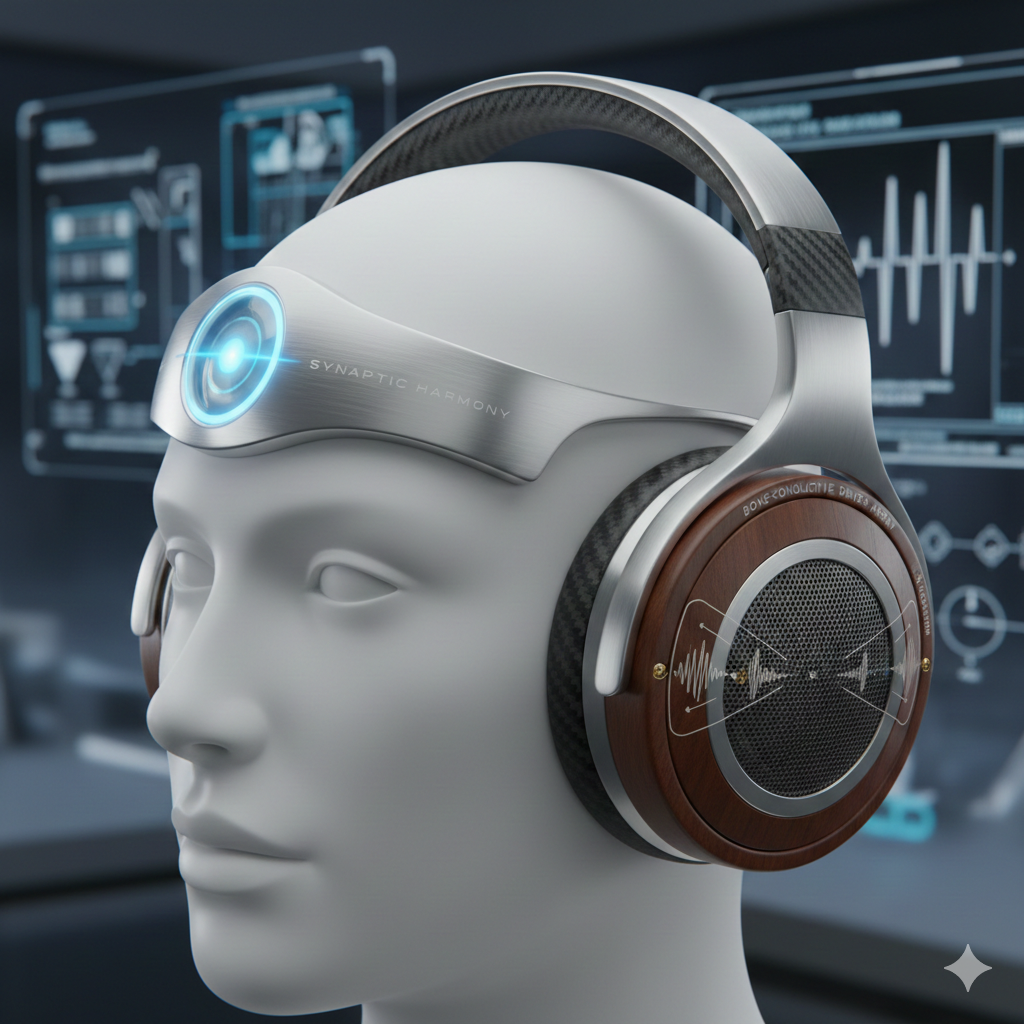
Music lovers — and to an even-greater extent, headphone manufacturers — have long overlooked the potential of bone conduction technology for immersive music listening experiences. While bone conduction has been primarily associated with situational awareness and safety, this narrow focus has neglected a fundamental need: the desire for a deeply immersive and private musical experience. By integrating bone conduction with traditional air conduction while focusing on the forehead as the “sweet spot”, hybrid headphones can fulfill this unmet demand, offering music enthusiasts a new way to connect with their favorite tracks on a profoundly sensory level. This approach not only enhances soundstage and detail but also redefines immersion, making music listening a richer, more enveloping experience.
- Expanded soundstage: Traditional driver-only headphones rely on air conduction alone. Adding bone conduction could deepen the sense of presence, making vocals and instruments feel more embodied.
- Enhanced detail and separation: Bone conduction naturally reinforces lower-mid frequencies, while drivers preserve treble sparkle. Together, they could deliver a more balanced, holographic sound.
- Private immersion: Unlike open-back designs that leak sound, hybrid conduction could achieve openness without disturbing others — ideal for late-night listening sessions.
- Reduced fatigue: By distributing sound delivery between bone and air pathways, listeners may experience less ear canal strain during long sessions.
- Central focus on the forehead: Positioning the bone conduction transducer on the forehead provides a central point for symmetrical distribution of musical waves, enhancing balanced sound perception and immersive experience.
Scientific Expansion Beyond Drivers
Bone conduction technology has existed for a long time, primarily serving practical and situational needs. However, its application to the nuanced demands of audiophiles and music lovers has been largely unexplored. This technology holds immense potential to transform music listening, and now is the time for manufacturers willing to embrace this challenge to innovate and deliver truly immersive hybrid bone–air conduction experiences that meet the high standards of discerning listeners.
- Crossover innovation: Just as speaker systems allocate frequencies across tweeters and woofers, headphones could intelligently split content between bone and air conduction.
- Driver limitations addressed: Air conduction drivers struggle with resonance control in the ear canal. Bone conduction bypasses this, offering a cleaner path for certain frequencies.
- DSP alignment: Digital signal processing can synchronize both pathways, ensuring coherent timing and phase alignment for a seamless listening experience.
- Perceptual research: Studies on binaural perception and phantom imaging suggest bone conduction could enhance the illusion of a centered vocal presence — the “phantom center” effect audiophiles cherish.
Why Audiophiles Should Be Excited
Audiophiles need not compromise. If sufficient demand arises from this discerning group, industry leaders like Sony, Bose, B&W, and others could be truly impelled to bring superior hybrid bone–air conduction headphones to market. This momentum would not only satisfy audiophiles but also elevate the listening experience for everyone, fostering innovation and expanding the horizons of personal audio technology.
- New frontier of fidelity: Hybrid conduction could become the next revolution after planar magnetic and electrostatic drivers.
- Personalized listening: With adaptive DSP, headphones could tailor the balance of bone vs. air conduction to individual hearing profiles.
- Cultural resonance: Just as vinyl and spatial audio reshaped listening habits, hybrid conduction could redefine what “private listening” means — music not just heard, but felt.
Hybrid bone–air conduction is not just about safety or awareness. It’s about unlocking a new dimension of private, immersive listening. For manufacturers, it’s a chance to lead the next revolution in headphone design. For music lovers, it’s the promise of hearing — and feeling — their favorite songs in a way that transcends drivers alone.