
Small Spaces, Big Illusions
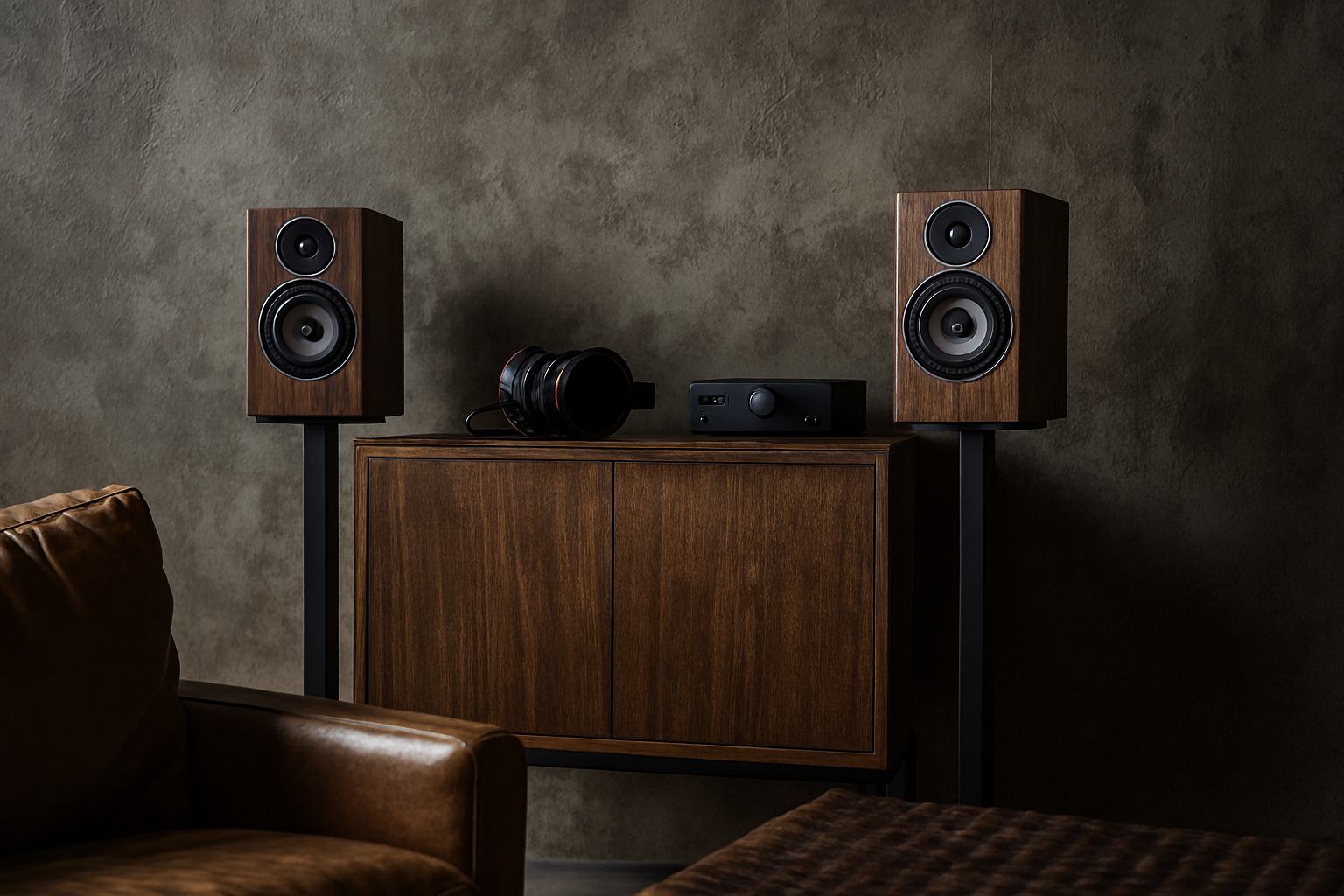
You sit down in a modest room, press play, and suddenly the phantom center appears — that ghostly voice hanging in the air, conjured not by towering floorstanding speakers but by a compact pair of bookshelves. The illusion is no less magical. In fact, for many listeners today, it’s more desirable. As living spaces shrink and listening becomes more intimate, bookshelf speakers have stepped into the spotlight, proving that stereo’s greatest trick doesn’t require monumental hardware.
Floorstanding speakers have long been the symbol of audiophile ambition — commanding presence, deeper bass, and a wide soundstage. Yet for most people, they’re simply not feasible: too large, too costly, too demanding of room acoustics. Modern bookshelf speakers, by contrast, thrive in smaller environments. With refined crossover design, careful driver alignment, and the ability to lock in that phantom center, they deliver an experience that competes honestly with their larger siblings. The question isn’t whether bookshelf speakers can replace floorstanders — it’s why they’ve become the more practical path to stereo magic for today’s listener.
Why Bookshelf Speakers Shine in Smaller Rooms
When you’re working with a modest space, bookshelf speakers often feel like the natural choice. Their compact size makes placement easier, and because the drivers sit closer together, they can lock in that phantom center with surprising precision. Instead of wrestling with room acoustics, you’re rewarded with a clean, centered vocal presence that feels almost magical.
Floorstanders: Power and Presence, But at a Cost
Floorstanding speakers bring undeniable authority — deeper bass, a wider soundstage, and a commanding presence in the room. But here’s the catch: they demand space. Without enough distance from walls and corners, that bass can turn boomy, and the imaging can lose focus. For many listeners, especially in apartments or smaller homes, the sheer scale of floorstanders becomes more burden than benefit.
The Technical Edge of Modern Bookshelves
Today’s bookshelf speakers aren’t just scaled-down versions of their bigger siblings. Advances in crossover design and driver alignment mean they can deliver clarity and imaging that rivals floorstanders. Pair them with a well-matched subwoofer, and you’ve got a system that covers the full frequency range without sacrificing the phantom center illusion. In fact, many audiophiles admit that in smaller rooms, bookshelves can sound more balanced overall.
“Stereo’s greatest trick doesn’t require monumental hardware — the phantom center lives even in small spaces.”
Listening as Lifestyle
There’s also a cultural shift at play. People want speakers that fit into their lives, not dominate them. Bookshelf speakers invite intimacy — a chair pulled into the sweet spot, a record spinning, and the phantom voice appearing between them. Floorstanders, by contrast, are about spectacle: impressive, yes, but often impractical. In today’s listening spaces, intimacy wins more hearts than sheer scale.
Two Worlds, One Choice
Step into the listening room and you’ll see two paths before you. On one side, the compact bookshelf speaker — modest in stature, yet capable of conjuring a phantom center so vivid it feels like a third speaker has appeared out of thin air. On the other, the floorstanding tower — tall, commanding, promising bass depth and cinematic scale. Both are alluring, but which world belongs to you?
The Bookshelf Experience: Intimacy and Precision
Bookshelf speakers thrive in smaller spaces. Their compact driver alignment often sharpens stereo imaging, letting vocals lock into place with uncanny precision. The Audio-Technica AT-SP3X offers a straightforward entry into this world, while the Dynaudio Evoke 10 brings refined craftsmanship and tonal balance. For those who want versatility, the Edifier MR5 adds powered amplification and wireless convenience, making it a modern plug‑and‑play solution.
These designs prove that you don’t need towering cabinets to experience stereo magic. In fact, in modest rooms, bookshelves often sound more balanced, avoiding the bass boom that can plague larger speakers.
The Floorstanding Experience: Scale and Authority
Floorstanding speakers are statement pieces. They stand tall, filling the room with bass and presence. The Bowers & Wilkins 703 S2 exemplifies refinement, with Aerofoil woofers and a Carbon Dome tweeter delivering scale and detail. The Cerwin-Vega SL-12 leans into raw power, its 12-inch woofer designed to shake walls and stir energy. Meanwhile, the DALI Oberon 5 offers a more balanced approach, blending musicality with room‑friendly proportions.
These towers deliver grandeur, but they demand space. Without careful placement and acoustic breathing room, their strengths can turn into excess.
Honest Trade-Offs
So where does that leave you? If your listening space is modest, bookshelf speakers may be the wiser choice — intimate, precise, and lifestyle‑friendly. Pair them with a subwoofer if you crave more bass, and you’ll have a system that rivals towers in honesty and enjoyment. Floorstanders, meanwhile, are best reserved for larger rooms where their scale can truly shine.
Head-to-Head Comparison
| Category | Bookshelf Speakers | Floorstanding Speakers |
|---|---|---|
| Models | Audio-Technica AT-SP3X Dynaudio Evoke 10 Edifier MR5 (links included) | Bowers & Wilkins 703 S2 Cerwin-Vega SL-12 DALI Oberon 5 (links included) |
| Phantom Center Imaging | Compact driver spacing sharpens stereo illusion; vocals lock in vividly. | Wide soundstage, but imaging can blur in untreated rooms. |
| Bass & Scale | Controlled low‑end; benefits from subwoofer pairing. | Deep bass authority; risks boominess in small spaces. |
| Room Fit | Ideal for apartments and modest listening rooms. | Require larger, acoustically treated spaces. |
| Lifestyle | Usually affordable, versatile, easy to integrate. | Usually statement pieces — impressive but less practical for most. |
💫 The Magic Lives Between the Speakers
At the end of the day, whether you choose the compact charm of bookshelf speakers or the towering authority of floorstanders, the real magic lies in that phantom center — the voice that appears out of nowhere, suspended between the speakers. It’s a reminder that stereo isn’t just about hardware; it’s about illusion, intimacy, and the joy of hearing music come alive in your space.
And that’s the beauty of today’s listening world: you don’t need a cathedral of sound to feel the presence of a singer in your room. A pair of well‑placed bookshelves can deliver that ghostly voice with startling clarity, while floorstanders can envelop you in grandeur when the room allows. Both paths lead to the same destination — a moment where the music disappears, and all that remains is you, the performance, and the phantom center holding it together.